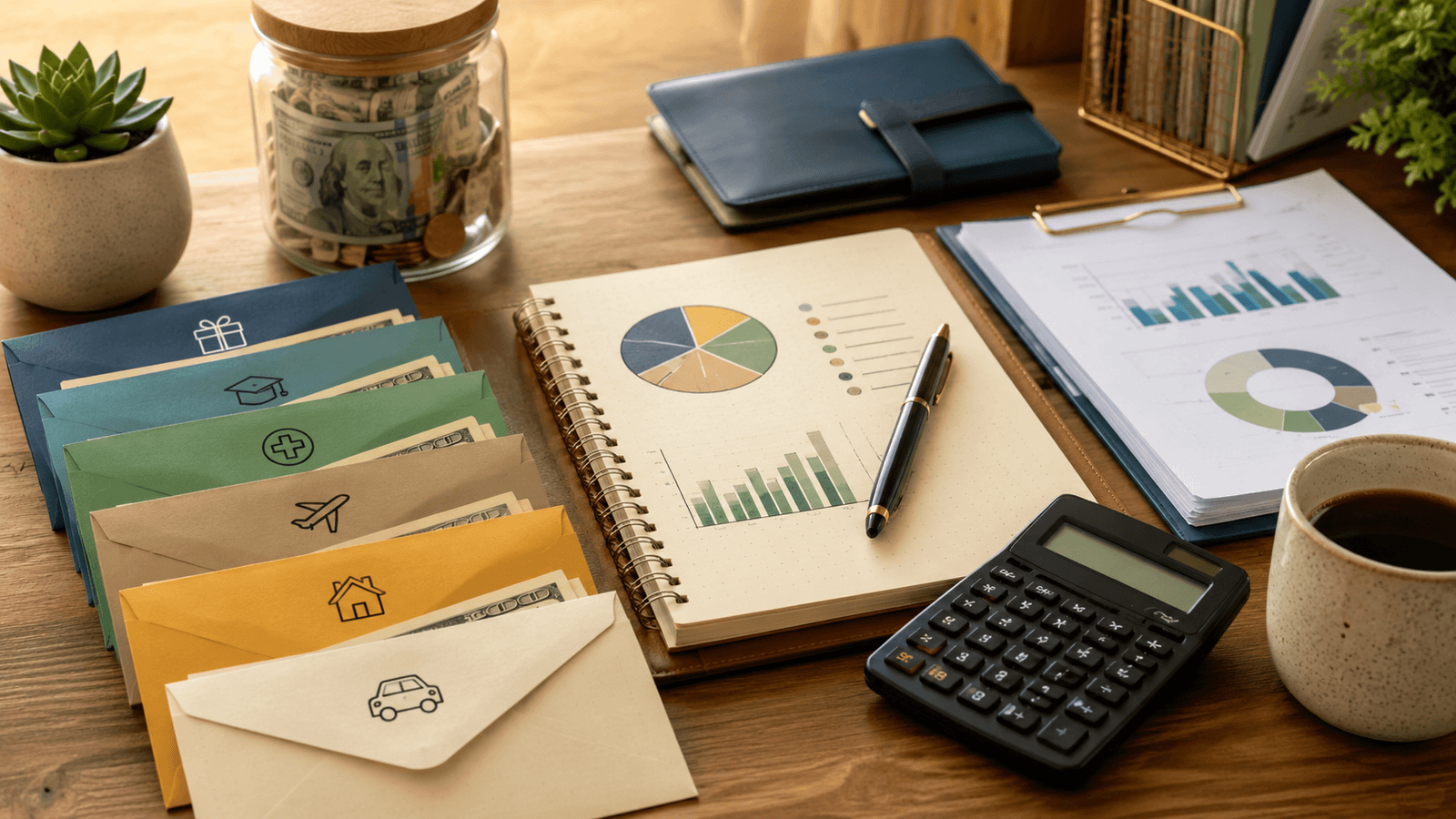
Sinking Funds for Irregular Expenses: A Calm Budgeting System for Predictable Surprises
Some expenses are not emergencies. They just do not happen every month. Car repairs, school supplies, annual subscriptions, gifts, travel, and insurance renewals can feel like surprises even when they are predictable.
Sinking funds solve that problem by turning large irregular costs into small planned deposits.

What Is a Sinking Fund?
A sinking fund is a savings bucket for a specific future expense. Instead of waiting for a bill and scrambling, you save a little each month.
If you know an expense is coming, it belongs in a sinking fund. If you do not know whether it will happen, it may belong in an emergency fund instead.
Sinking Fund vs Emergency Fund
An emergency fund protects you from shocks: job loss, urgent medical costs, major repairs, or sudden income gaps.
A sinking fund prepares for expected costs:
- Car maintenance
- Home repairs
- Holidays and gifts
- Annual insurance premiums
- School expenses
- Pet care
- Travel
- Clothing
- Taxes for freelancers
The difference is predictability. A tire replacement may feel urgent, but car maintenance is not a mystery. Cars need care. A sinking fund makes that reality less stressful.
Start With the Big Three
Do not create twelve buckets on day one. Start with the categories that most often break your budget.
For many households, the first three are:
- Car maintenance
- Gifts and holidays
- Annual bills
Freelancers might start with taxes, software renewals, and slow-month income support. Homeowners might choose repairs, insurance deductibles, and seasonal maintenance.
How to Calculate Monthly Deposits
Use a simple formula:
Expected cost / months until needed = monthly sinking fund deposit
If a bill is annual, divide by twelve. If a trip is six months away, divide the estimated cost by six. If the expense is irregular, use last year's total as a starting estimate.
You do not need to be exact. You need to be less surprised than last time.
Example Categories
Here are useful sinking fund ideas:
- Vehicle: oil changes, tires, registration, repairs
- Home: small repairs, filters, tools, seasonal maintenance
- Medical: copays, dental visits, glasses
- Gifts: birthdays, holidays, weddings, baby showers
- Kids: school supplies, activities, clothes
- Pets: vet visits, grooming, medication
- Travel: flights, hotels, meals, transport
- Technology: phone replacement, laptop repair, accessories
- Annual bills: insurance, memberships, software, taxes
Choose categories based on your real life, not someone else's perfect budget.
Where to Keep the Money
Use a savings account, sub-accounts, or a budgeting app that supports categories. The important part is separation. If sinking fund money sits mixed with everyday checking, it is easy to spend accidentally.
Some people prefer one savings account with a spreadsheet. Others like separate buckets inside an online bank. Either can work.
Make Transfers Automatic
Automation helps because sinking funds are easy to forget. Schedule transfers after payday, even if the amounts are small.
Small deposits count. A fund that covers half a repair is still better than no fund at all.
What If You Cannot Fund Every Category?
Prioritize by risk and timing.
Ask:
- Which expense is most likely soon?
- Which expense would cause debt if unpaid?
- Which expense has a fixed deadline?
- Which expense can be reduced or delayed?
Fund the most urgent categories first. You can add nice-to-have categories later.
Use Minimum Targets First
Large targets can feel discouraging, so begin with minimum useful balances. A car fund does not need to cover every possible repair before it becomes helpful. A gift fund does not need to cover an entire holiday season before it reduces stress.
Choose a first milestone for each category. Once a fund reaches that milestone, decide whether to keep building it, pause it, or redirect money to a more urgent bucket. This makes the system feel rewarding sooner.
How to Use the Money
When the expense arrives, use the sinking fund without guilt. That is the whole point.
After spending, update the balance and restart the monthly deposits. If the cost was higher than expected, adjust the future target. If it was lower, keep the extra in the bucket or move it to another priority.
Common Mistakes
The first mistake is creating too many funds. A complicated system feels exciting for a week and then becomes homework.
The second mistake is treating sinking funds as optional money. Label the categories clearly so you remember what the money is for.
The third mistake is expecting perfect estimates. Life is lumpy. The system only needs to reduce the size of the bump.
A Simple Monthly Review
Once a month, review:
- Current balance in each fund
- Upcoming expenses
- Categories that need more money
- Funds that can pause for now
- New irregular expenses that appeared
This review can take ten minutes.
When to Combine Funds
If several categories are small and rarely used, combine them into a broader fund. For example, "home supplies," "small repairs," and "seasonal items" might become one home fund.
Combining funds reduces admin work. Splitting funds adds clarity. Use the version that helps you make better decisions with less friction.
Final Thought
Sinking funds make budgeting feel less dramatic. They do not create more income, but they help your existing income meet real life more gracefully.
The best budget is not the one that pretends irregular expenses will stop happening. It is the one that expects them and prepares quietly.
Frequently Asked Questions
What is a sinking fund?
A sinking fund is money set aside gradually for a known future expense, such as car maintenance, annual insurance, holidays, school costs, or home repairs.
How many sinking funds should I have?
Start with three to five high-impact categories. Too many funds can become hard to manage, so add more only when the system feels easy.
Is a sinking fund the same as an emergency fund?
No. An emergency fund is for unexpected financial shocks, while sinking funds are for predictable but irregular expenses.