How AI Will Reshape the IT Industry in the Next 3 Years: A Developer's Honest Take
There is a lot of noise about AI "killing" software jobs. Most of it is either panic or sales pitch. I have spent the last several years building full-stack systems and running a small development team, and I want to give you a more grounded view: what is actually changing, how fast, and what a working IT professional should do about it between now and 2029.
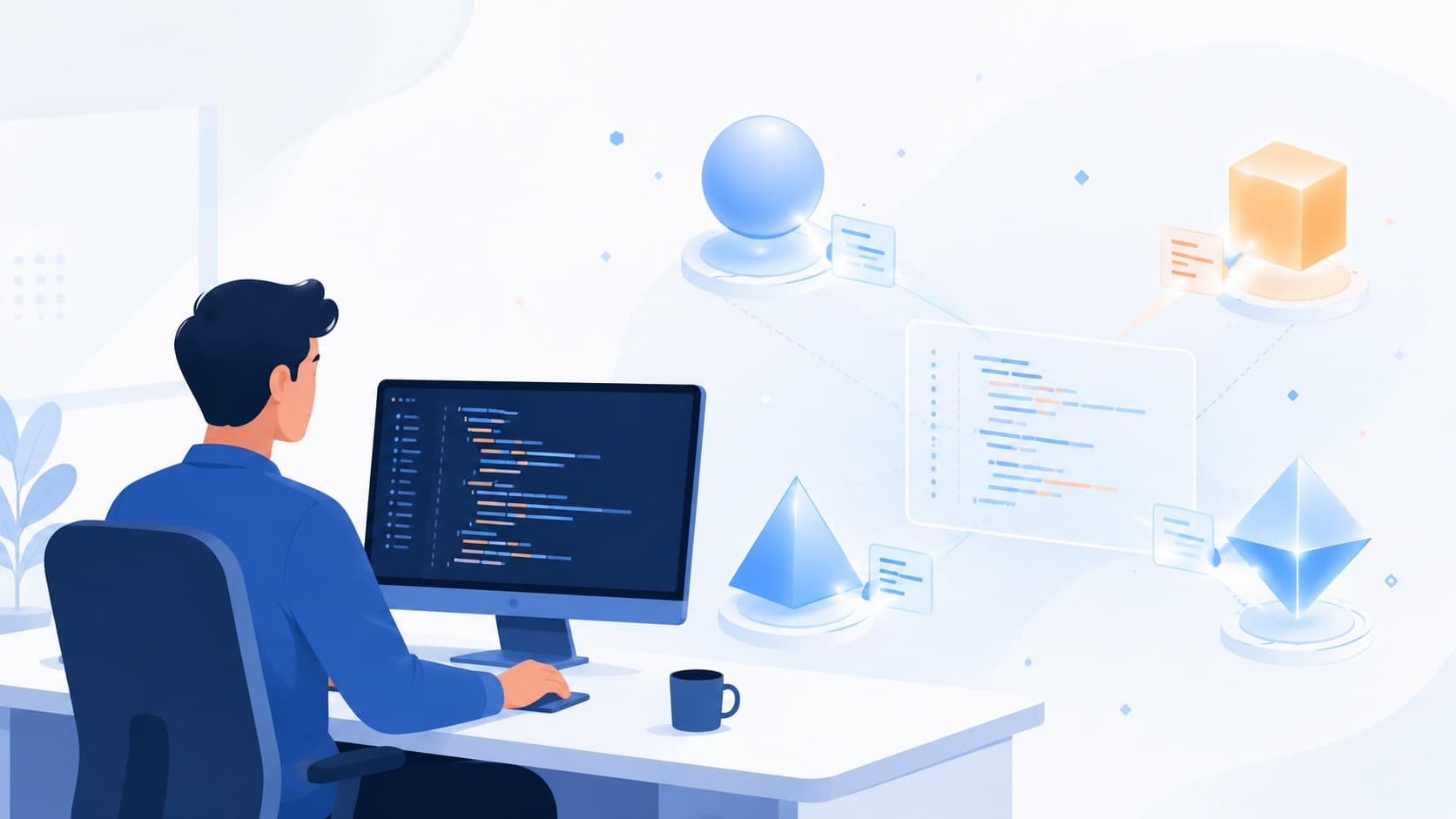
The short version: the job is not disappearing. It is being inverted. The part of the work that used to take the most time — typing the code — is becoming the cheap part. The part that used to be a small slice of the week — deciding what to build and verifying it is correct — is becoming the whole job.

AI is not removing the fork in the career path. It is making the higher-value path more explicit: judgment, ownership, and verification.
The signal that matters most
You can ignore most predictions and watch one number: how much code AI now writes inside the companies building AI.
Anthropic recently disclosed that, as of mid-2026, more than 80% of the code merged into its own codebase was authored by its AI model, up from low single digits before early 2025. The typical engineer there was shipping roughly 8 times as much code per day as in 2024 — not because they type faster, but because they direct and review rather than write.
Be careful with that 8x figure; lines of code is a crude measure and overstates real productivity. But the direction is unambiguous, and it is the clearest leading indicator we have. Frontier labs are simply a year or two ahead of where the rest of the industry will be. What is normal at Anthropic in 2026 will be normal at ordinary software companies by 2028.
What I think happens between 2026 and 2029
Here is my actual opinion, stated plainly so you can disagree with it.
1. "Writing code" stops being the skill that gets you hired. For the last twenty years, the core test of a developer was: can you produce working code? By 2028 that question is close to free. The differentiator becomes whether you can specify a problem precisely, judge whether the generated solution is correct, and catch the subtle failure the model missed. Code review, not code authorship, becomes the bottleneck — Anthropic has already publicly hit exactly this wall internally.
2. Junior roles get harder to enter, and that is a real problem. This is the part of my opinion I am least happy about. The traditional on-ramp — give a junior the simple, well-specified tasks while they learn — is exactly the work AI now does best and cheapest. Companies will be tempted to stop hiring juniors. I think this is short-sighted, because today's seniors came from yesterday's juniors, but the incentive is real and many firms will fall for it. If you are early-career, you cannot rely on the old path. You have to skip ahead to judgment work faster than previous generations did.
3. Small teams start doing the work of large ones. This is the genuinely exciting part for people like me who run lean operations. A 5-person shop with strong AI tooling can credibly take on projects that needed 20 people two years ago. The advantage shifts away from headcount and toward how well a small team can orchestrate AI agents and verify their output. For founders and freelancers, this is the biggest opportunity of the decade.
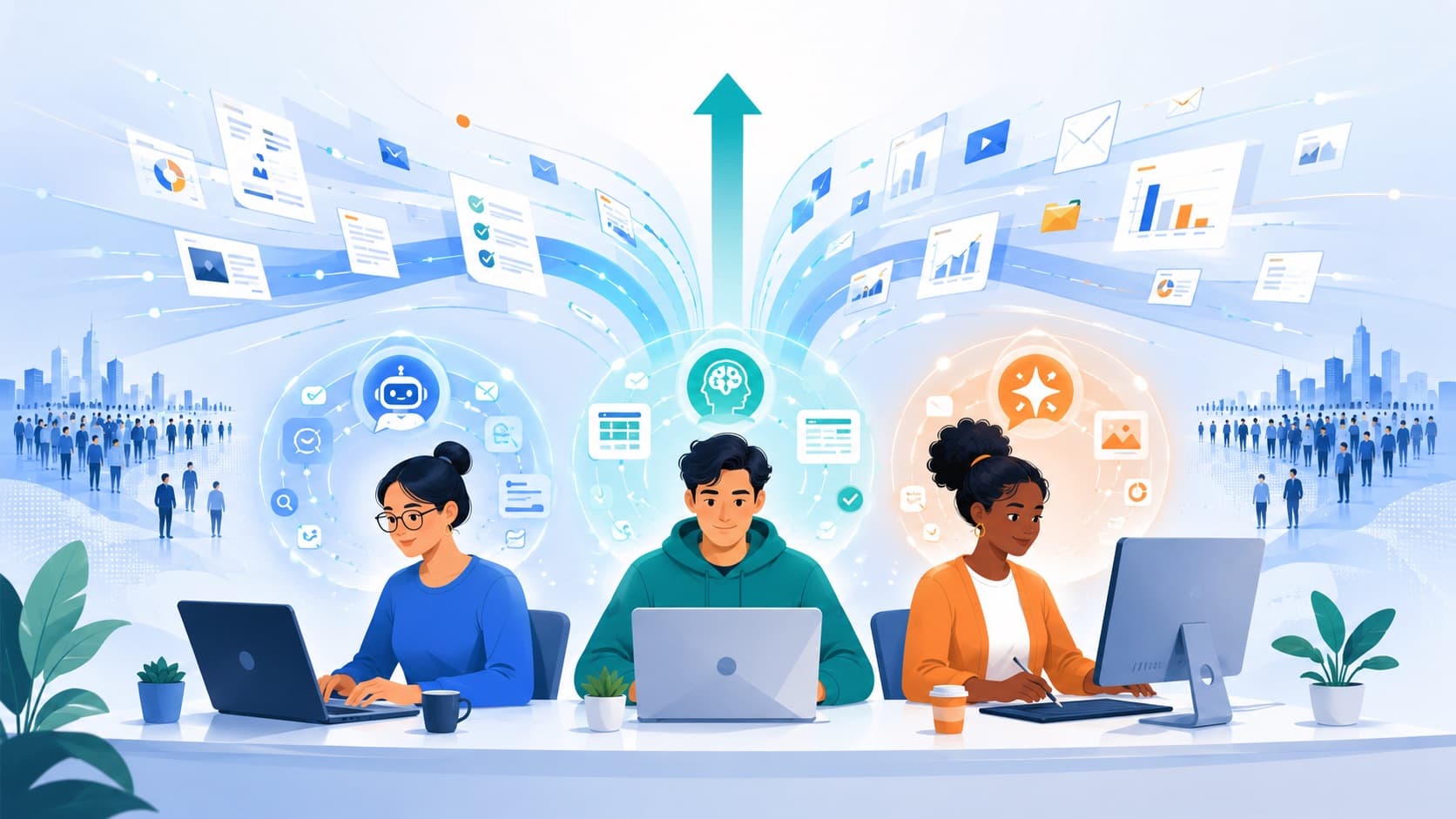
The biggest near-term opportunity is leverage: small teams using AI assistants to produce, review, and ship more work without adding headcount.
4. Salaries split, they do not uniformly fall. I do not buy the "all developer salaries collapse" narrative. What I expect is a widening gap. People who only produce code under supervision get commoditized and squeezed. People who own outcomes — architecture, judgment, knowing what is worth building — become more valuable, because each of them now steers far more output than before. The middle hollows out. The top and the entrepreneurial edge do well.
5. New categories of work appear that do not have names yet. Every automation wave destroys some jobs and invents others. We are about to need people who are good at validating AI output at scale, at securing systems that AI helped build (Anthropic's own data shows AI finding tens of thousands of vulnerabilities — someone has to patch them), and at the messy human work of figuring out which problems are worth solving at all. These roles barely exist today. They will be normal by 2029.
What I think is overhyped
To keep this honest, here is where I think the loudest predictions are wrong.
The "all programmers unemployed by 2027" crowd is ignoring a basic principle: speeding up one part of a process just moves the bottleneck somewhere else. When code becomes free, review, integration, security, and decision-making become the constraints — and those are still substantially human. The work does not vanish; it relocates to the parts AI is still bad at.
There is also a real chance the curve bends. Today's improvements may turn out to be an S-curve that flattens, not an exponential that runs forever. Nobody honestly knows. Anyone who tells you the timeline with certainty is selling something.
What to actually do (the part that matters)
Opinions are cheap. Here is what I would tell anyone in IT to do this year:
- Become the person who directs and verifies, not the person who types. Use AI tools daily, deliberately, until orchestrating them is second nature. The professionals who resist this will not be replaced by AI — they will be replaced by professionals who use it.
- Invest in the durable skills: system design, debugging unfamiliar systems, security, and judgment about what is worth building. These are exactly the skills AI is still weakest at, and therefore where your value concentrates.
- If you are junior, go deeper faster. Do not wait for someone to hand you simple tasks. Build real things, own them end to end, and develop judgment early. The old slow apprenticeship is closing.
- If you run a small team or work solo, lean in now. This is a rare window where small operators can punch far above their weight. The leverage will not stay this cheap forever.
The bottom line
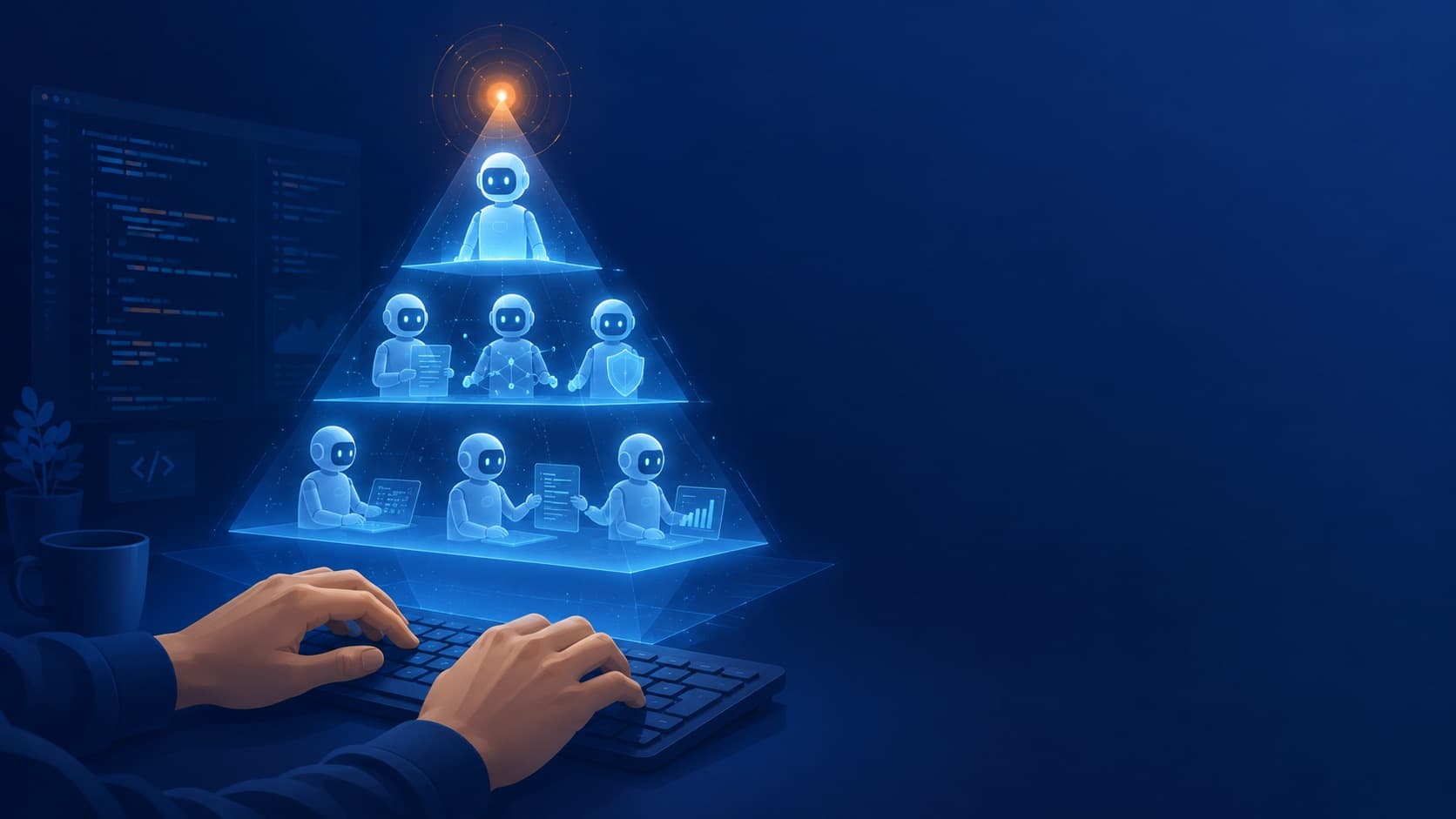
The IT industry is not ending. It is being rebuilt around a new center of gravity: human judgment sitting on top of a pyramid of AI agents. The developers who thrive between now and 2029 will not be the ones who write the most code. They will be the ones who decide what is worth building, and can tell when the machine got it wrong.
That has always been the most valuable part of the job. AI is just making it the only part that is scarce.
This is an opinion piece based on publicly disclosed data from frontier AI labs and my own experience building software. Predictions are inherently uncertain; treat them as a considered view, not a forecast.