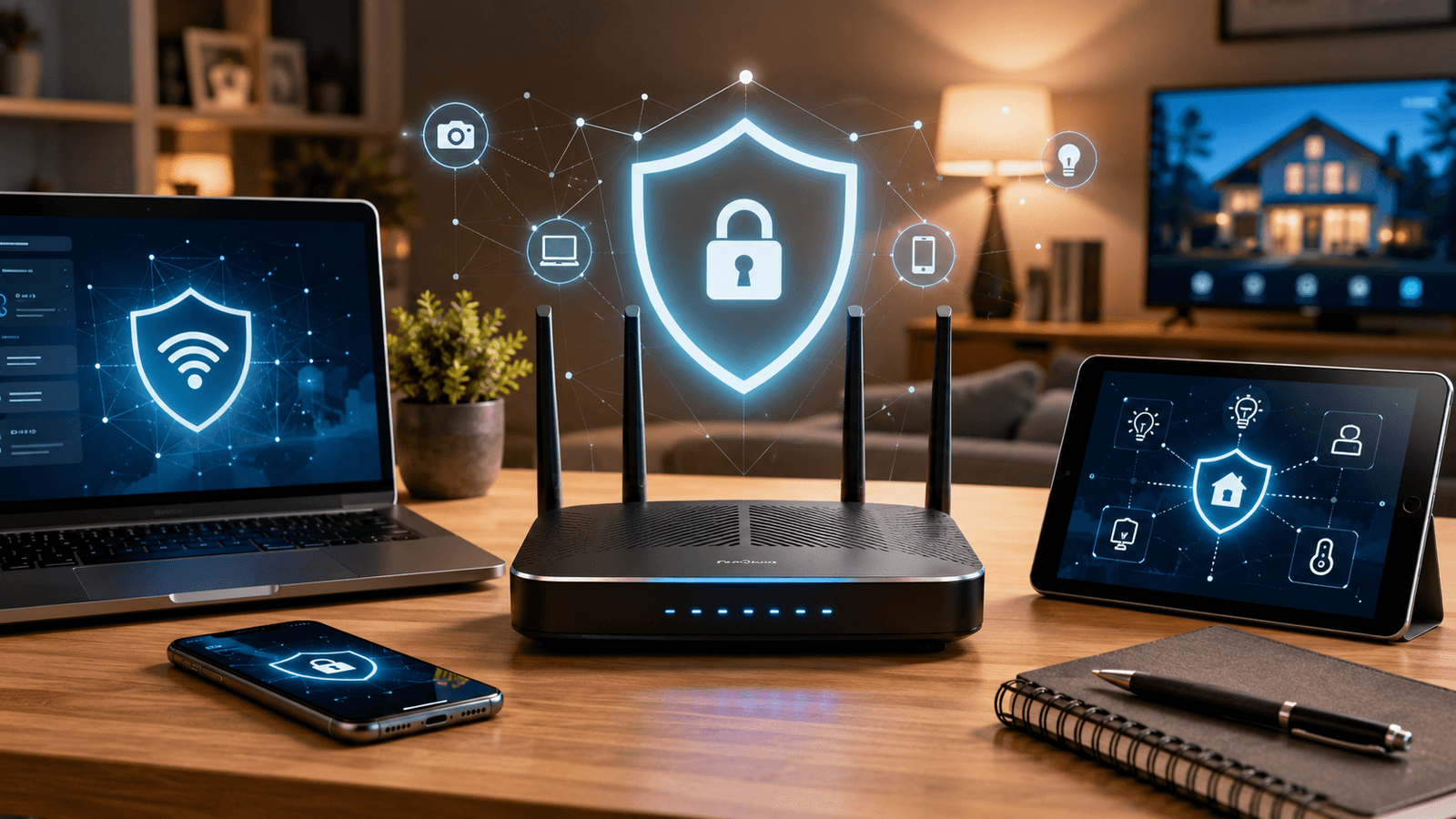
Home Network Security Checklist: 17 Steps to Protect Your Wi-Fi and Devices
Your home network is now the front door for work laptops, family phones, smart TVs, cameras, speakers, gaming consoles, and cloud accounts. A weak router setup can expose far more than slow internet.
The good news: you do not need to be a cybersecurity expert. Most home network security comes from a small set of practical habits.

1. Change the Router Admin Password
Your Wi-Fi password and router admin password are not the same thing. The router admin password controls the settings panel. If it is still using a default password, change it immediately.
Use a long unique password and store it in a password manager.
2. Use WPA2 or WPA3 Encryption
Open Wi-Fi and outdated encryption should not be used. In your router settings, choose WPA3 if available. If not, WPA2-Personal is still acceptable for most homes.
Avoid WEP and WPA because they are outdated.
3. Use a Strong Wi-Fi Password
A strong Wi-Fi password should be long, unique, and not based on your address, family name, pet name, or phone number.
A passphrase works well: several unrelated words with numbers or symbols added.
4. Rename the Network
Your network name should not reveal your router model, apartment number, or full name. A generic name is fine.
This does not make you invisible, but it avoids handing out useful information.
5. Update Router Firmware
Router updates patch security flaws and stability issues. Log into your router monthly and check for firmware updates, or enable automatic updates if the option exists.
If your router has not received updates in years, it may be time to replace it.
6. Disable WPS
WPS was designed to make connecting easier, but it can weaken security. If your router has WPS enabled, turn it off.
Typing a password takes a little longer, but it is safer.
7. Create a Guest Network
Use a guest network for visitors and smart devices. This keeps untrusted devices away from laptops, phones, network drives, and work equipment.
Give the guest network a separate password and turn on isolation if your router supports it.
8. Put Smart Devices on Guest Wi-Fi
Smart TVs, cameras, plugs, bulbs, printers, and speakers often receive fewer updates than phones and laptops. Keeping them on a separate network limits the damage if one device is compromised.
This is especially useful for cameras and cheap IoT devices.
9. Turn Off Remote Router Access
Most people do not need to manage their router from outside the home. Disable remote administration unless you have a specific, secure reason to use it.
If remote access is required, use the router vendor's recommended secure method and a very strong password.
10. Review Connected Devices
Once a month, open your router app or admin panel and check the connected device list. Rename devices you recognize so strange connections stand out.
If you see an unknown device, change the Wi-Fi password and reconnect only trusted devices.
11. Secure Work Laptops Separately
If you work from home, treat work devices as higher risk. Keep them updated, use company VPN tools when required, and avoid sharing them with family members.
Do not install random browser extensions or unapproved software.
12. Use Password Managers
Many network problems become account problems. A password manager helps every family member use unique passwords for email, banking, school portals, shopping, and social accounts.
Email accounts matter most because they can reset passwords for other services.
13. Enable Multi-Factor Authentication
Turn on multi-factor authentication for email, banking, cloud storage, password managers, and social media. Authentication apps or passkeys are usually stronger than SMS codes.
This protects you even if a password leaks.
14. Keep Devices Updated
Phones, laptops, tablets, browsers, and smart devices should receive regular updates. Enable automatic updates where possible.
Old devices that no longer receive updates should be retired or isolated from sensitive accounts.
15. Be Careful With Port Forwarding
Port forwarding can expose devices to the internet. Do not enable it unless you understand exactly why it is needed.
For remote access to files or cameras, use reputable cloud access or a secure VPN setup instead of opening random ports.
16. Back Up Important Files
Security is not only prevention. It is recovery. Use automatic backups for family photos, tax documents, business files, and school work.
Follow the 3-2-1 idea: three copies, two storage types, one copy away from the main device.
17. Teach the Household
The best router settings cannot fix every risky click. Teach the household to watch for fake delivery texts, urgent password warnings, suspicious attachments, and too-good-to-be-true offers.
Make it normal to ask before clicking something strange.
Quick Monthly Checklist
- Router firmware checked
- Unknown devices reviewed
- Guest network still enabled
- Main passwords stored safely
- Important devices updated
- Backups completed
Final Takeaway
Home network security works best when it is simple enough to maintain. Change the defaults, update regularly, separate risky devices, and protect your accounts with strong passwords and multi-factor authentication. Those basics give most households a much stronger foundation.
Frequently Asked Questions
What is the most important home network security step?
Change the router admin password and use strong WPA2 or WPA3 Wi-Fi encryption. Those two steps block many common home network attacks.
Should smart home devices be on a separate Wi-Fi network?
Yes. Put smart TVs, cameras, speakers, and IoT devices on a guest network when possible. This limits what they can access if one device becomes vulnerable.
How often should I update my router?
Check for firmware updates every month or enable automatic updates if your router supports them. Replace routers that no longer receive security updates.