
Best Home Exercises Without Equipment: 25 Workouts for 2026
Finding time for fitness has never been more challenging, but the best home exercises without equipment offer a perfect solution for busy lifestyles in 2026. These bodyweight workouts require nothing more than your own body and a small space, making them ideal for anyone looking to build strength, burn calories, and improve overall health without stepping foot in a gym.
Bodyweight training has gained tremendous popularity because it eliminates common barriers to exercise: expensive gym memberships, crowded facilities, and time-consuming commutes. With the right exercises and proper technique, you can achieve remarkable fitness results from the comfort of your own home.
Why Equipment-Free Home Workouts Are Perfect for 2026
The modern fitness landscape has shifted dramatically toward accessible, convenient workout solutions. Equipment-free home exercises offer unmatched flexibility for today's demanding schedules, allowing you to maintain fitness consistency regardless of external circumstances.
Cost-effectiveness stands as one of the primary advantages of bodyweight training. While gym memberships and home equipment can cost hundreds or thousands of dollars annually, bodyweight exercises require zero financial investment. This makes fitness accessible to everyone, regardless of budget constraints.
Time efficiency represents another crucial benefit. You can complete an effective workout in 15-30 minutes without travel time, equipment setup, or waiting for machines. This efficiency makes it easier to maintain consistent exercise habits, which is essential for long-term fitness success.
Bodyweight exercises also provide functional strength that translates directly to daily activities. Movements like squats, push-ups, and planks mirror real-world actions, improving your ability to perform everyday tasks with greater ease and reduced injury risk.
The progressive nature of bodyweight training allows for continuous improvement. As you become stronger, you can modify exercises to increase difficulty, ensuring ongoing challenges and results without purchasing additional equipment.
Upper Body Exercises Without Equipment
Building upper body strength without equipment is entirely achievable through strategic bodyweight movements. These exercises target your chest, shoulders, back, and arms using only your body weight as resistance.
Push-Up Variations
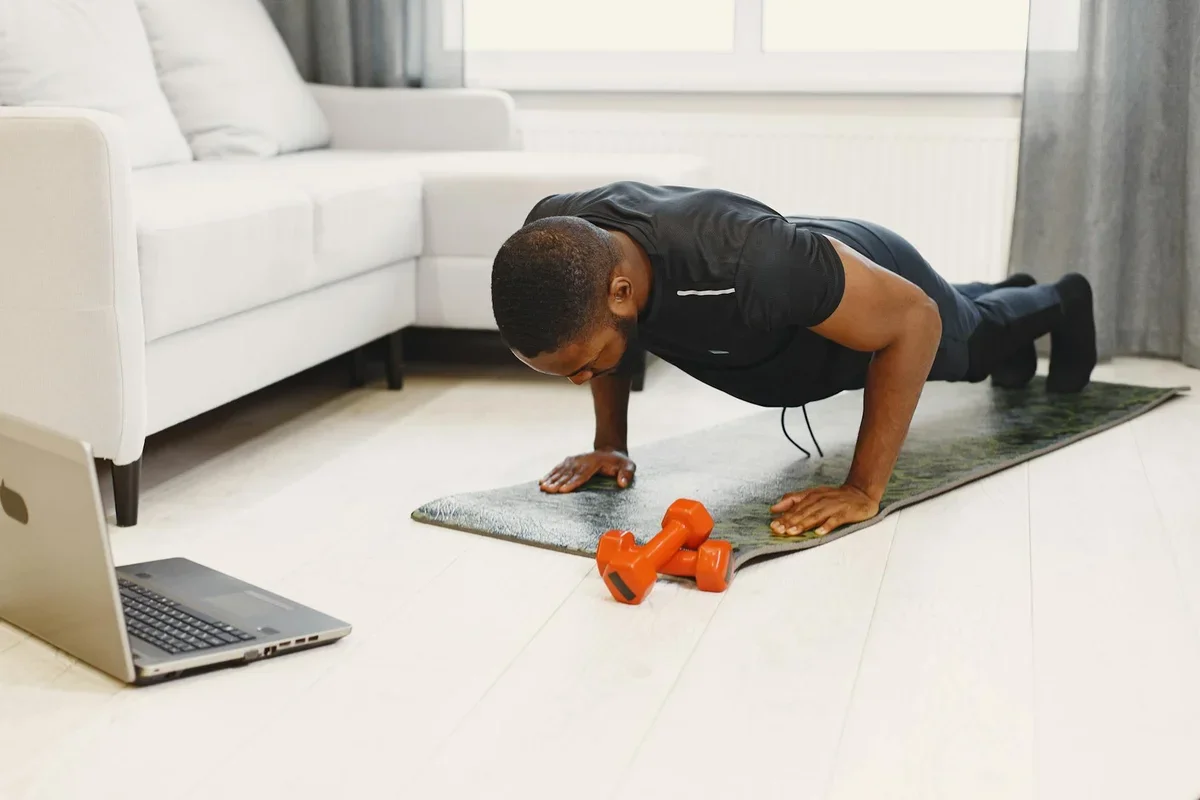
Standard Push-Up: Start in a plank position with hands slightly wider than shoulder-width apart. Lower your body until your chest nearly touches the floor, then push back up to starting position. Keep your core engaged and maintain a straight line from head to heels.
Wide-Grip Push-Up: Place hands wider than standard position to emphasize chest muscles. This variation increases the challenge on your pectoral muscles while reducing tricep involvement.
Diamond Push-Up: Form a diamond shape with your hands beneath your chest. This advanced variation targets triceps more intensely than standard push-ups.
Incline Push-Up: Place hands on an elevated surface like a couch or chair to reduce difficulty. This modification is perfect for beginners building toward standard push-ups.
Decline Push-Up: Elevate your feet on a surface while keeping hands on the ground. This advanced variation increases the challenge by shifting more weight to your upper body.
Pike Push-Ups and Shoulder Exercises
Pike Push-Up: Start in downward dog position, then lower your head toward the ground between your hands. Push back to starting position. This exercise primarily targets shoulders and upper chest.
Handstand Wall Walk: Begin in push-up position with feet against a wall. Walk your feet up the wall while walking hands closer to the wall. This builds shoulder strength and improves balance.
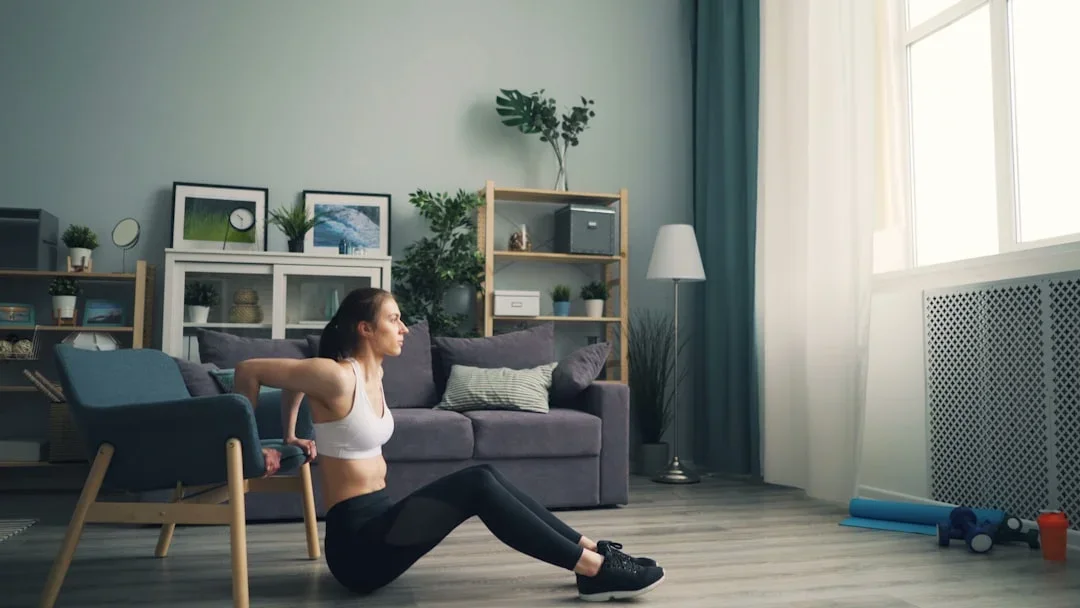
Tricep Dips: Use a sturdy chair or couch edge. Sit on the edge with hands beside your hips, then slide forward and lower your body by bending your elbows. Push back up to complete the movement.
Lower Body Bodyweight Exercises
Lower body strength forms the foundation of functional fitness, and these equipment-free exercises effectively target your glutes, quadriceps, hamstrings, and calves.
Fundamental Lower Body Movements
Bodyweight Squat: Stand with feet hip-width apart, toes slightly turned out. Lower your hips back and down as if sitting in a chair, keeping your chest up and weight in your heels. Return to standing position.
Jump Squat: Perform a standard squat, then explosively jump up, landing softly and immediately transitioning into the next squat. This plyometric variation adds cardiovascular intensity.
Single-Leg Squat: Also known as pistol squats, this advanced exercise requires significant strength and balance. Start by lowering onto one leg while extending the other forward.
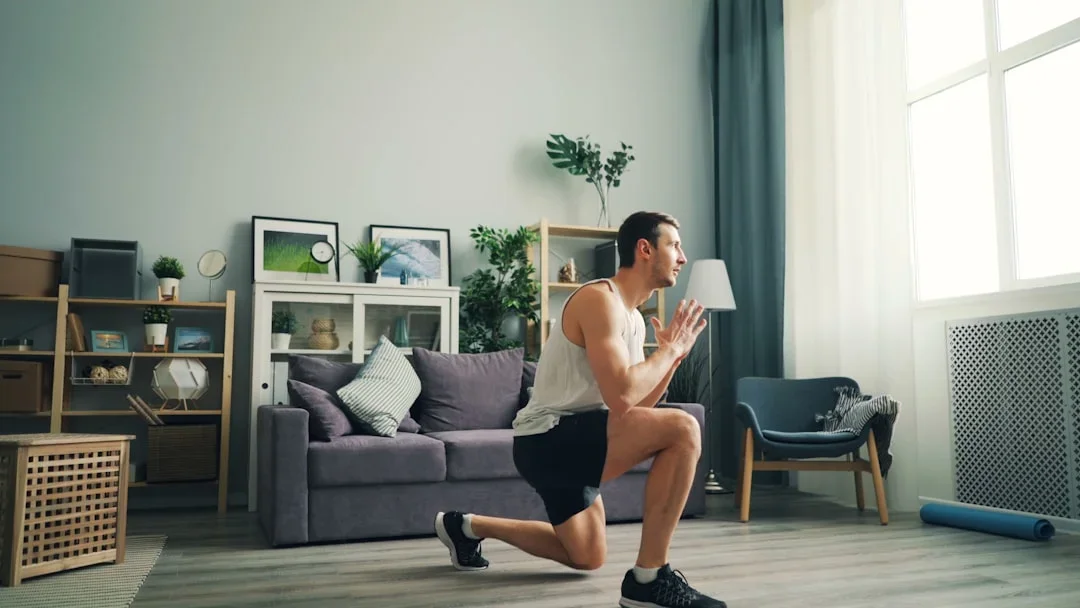
Forward Lunge: Step forward with one leg, lowering your hips until both knees are bent at 90 degrees. Push back to starting position and repeat with the opposite leg.
Reverse Lunge: Step backward instead of forward, maintaining the same knee angle and movement pattern. This variation often feels more natural and places less stress on the front knee.
Glute and Posterior Chain Exercises
Single-Leg Glute Bridge: Lie on your back with knees bent. Lift one leg and drive through the heel of the planted foot to raise your hips. This unilateral exercise addresses strength imbalances.
Wall Sit: Stand with your back against a wall, then slide down until your thighs are parallel to the floor. Hold this position to build isometric strength in your quadriceps.
Calf Raises: Rise up onto your toes, hold briefly, then lower slowly. Perform single-leg variations for increased difficulty.
Bulgarian Split Squat: Place your rear foot on an elevated surface behind you. Lower into a lunge position, focusing the work on your front leg.
Core Strengthening Exercises at Home
A strong core provides stability for all movement patterns and is essential for both athletic performance and daily activities. These exercises target your entire core without requiring any equipment.
Plank Variations
Standard Plank: Hold a push-up position with forearms on the ground, maintaining a straight line from head to heels. Engage your core and avoid sagging or raising your hips.
Side Plank: Lie on your side and prop yourself up on your forearm. Lift your hips to create a straight line from head to feet. This exercise targets the often-neglected lateral core muscles.
Plank Up-Down: Start in a standard plank, then push up to a high plank position one arm at a time, then return to forearm plank. This dynamic variation adds an upper body challenge.
Dynamic Core Exercises
Mountain Climbers: Start in a high plank position and alternate bringing knees toward your chest in a running motion. Maintain proper plank form while increasing tempo for cardiovascular benefits.
Russian Twists: Sit with knees bent and feet off the ground, leaning back slightly. Rotate your torso side to side, touching the ground beside your hips.
Bicycle Crunches: Lie on your back with hands behind your head. Bring opposite elbow and knee together while extending the other leg, alternating sides in a cycling motion.
Leg Raises: Lie flat and lift your legs toward the ceiling, then lower slowly without touching the ground. This exercise targets the often-challenging lower abdominals.
Full-Body HIIT Workouts Without Equipment
High-Intensity Interval Training (HIIT) maximizes calorie burn and cardiovascular benefits while building strength across multiple muscle groups. These explosive movements combine strength and cardio for maximum efficiency.
High-Intensity Movements
Burpees: Start standing, drop into a squat with hands on the ground, jump feet back into plank position, perform a push-up, jump feet forward, then jump up with arms overhead. This full-body exercise elevates heart rate quickly.
Jumping Jacks: Jump feet apart while raising arms overhead, then return to starting position. This classic exercise provides excellent cardiovascular conditioning.
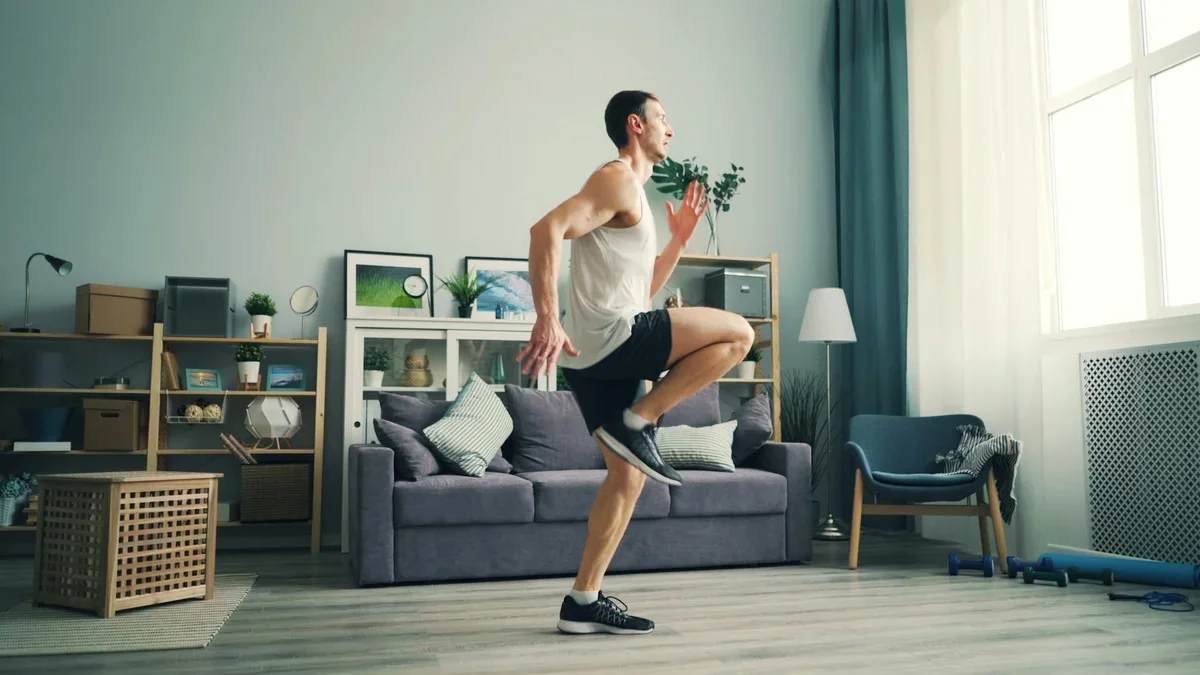
High Knees: Run in place while bringing knees up toward your chest as high as possible. Pump your arms to increase intensity and maintain balance.
Tuck Jumps: Jump up while bringing knees toward your chest, then land softly. This explosive movement builds power in your legs while challenging your cardiovascular system.
HIIT Circuit Examples
Beginner Circuit: Perform each exercise for 30 seconds with 30 seconds rest: jumping jacks, modified burpees, mountain climbers, and bodyweight squats.
Intermediate Circuit: Work for 45 seconds with 15 seconds rest: burpees, jump squats, push-ups, and high knees.
Advanced Circuit: Execute 60 seconds work with 10 seconds rest: tuck jumps, diamond push-ups, single-leg burpees, and plank up-downs.
Beginner to Advanced Workout Progressions
Progressive overload remains essential for continued improvement, even without external weights. These modifications allow you to increase difficulty as your fitness improves.
Beginner Modifications
Start with modified versions of challenging exercises. Wall push-ups, assisted squats, and knee planks provide proper movement patterns while building foundational strength. Focus on form over quantity during initial weeks.
Volume progression involves gradually increasing repetitions or duration. Begin with 2 sets of 8-10 repetitions, progressing to 3 sets of 15-20 as strength improves.
Frequency progression allows for more workout days per week as recovery capacity improves. Start with 3 days per week, eventually progressing to 5-6 days with proper recovery strategies.
Advanced Progressions
Unilateral variations increase difficulty by working one limb at a time. Single-leg squats, one-arm push-ups, and single-arm planks challenge stability and strength asymmetrically.
Plyometric additions incorporate explosive movements into standard exercises. Jump squats, clap push-ups, and explosive lunges add power development to strength training.
Tempo manipulation changes the speed of movement phases. Slow negative phases (3-5 seconds) increase muscle tension and difficulty without changing the exercise structure.
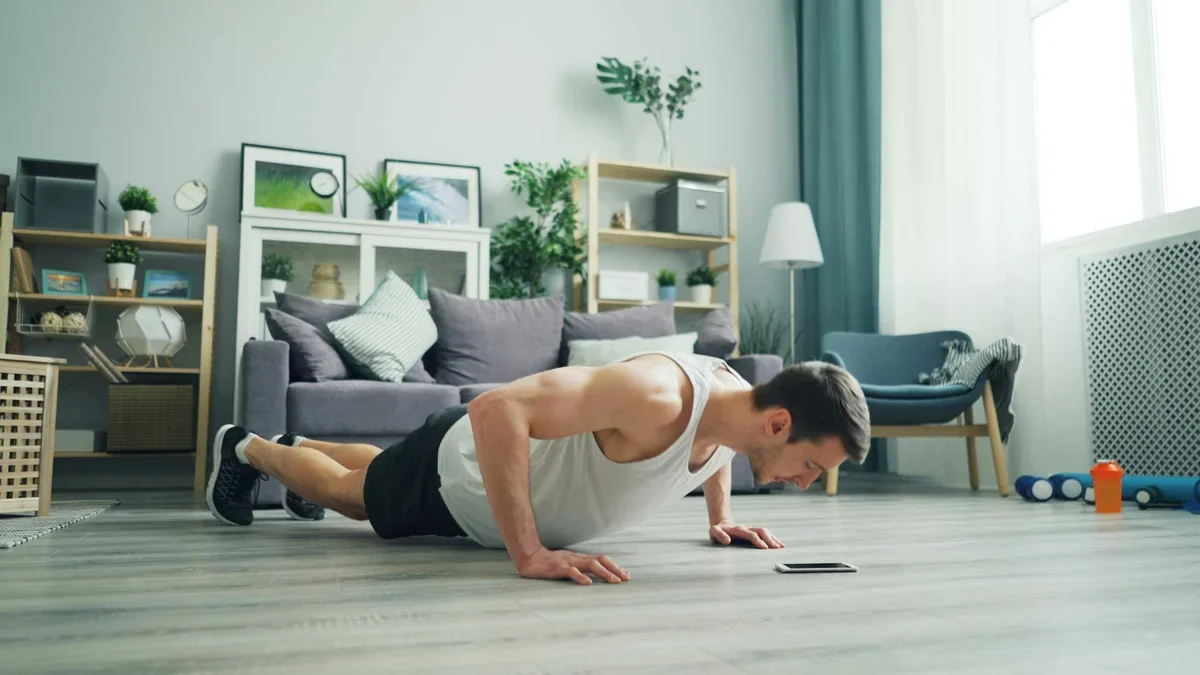
Creating Your Equipment-Free Exercise Routine
Structuring effective workouts requires balancing different movement patterns, energy systems, and recovery needs. A well-designed routine ensures consistent progress while preventing overuse injuries.
Weekly Workout Structure
Full-Body Approach: Perform total-body workouts 3 times per week with rest days between sessions. This method works well for beginners and those with limited time.
Upper/Lower Split: Alternate between upper body and lower body focus days, allowing for more volume per muscle group while maintaining recovery.
Push/Pull/Legs: Divide workouts into pushing movements, pulling movements, and leg-focused sessions for advanced practitioners wanting specialized training.
Sample Workout Plans
Beginner 20-Minute Routine:
- Warm-up: 5 minutes of light movement
- Circuit (3 rounds): Wall push-ups (10), bodyweight squats (15), modified plank (30 seconds), jumping jacks (30 seconds)
- Cool-down: 5 minutes of stretching
Intermediate 30-Minute Session:
- Warm-up: 5 minutes dynamic movement
- Strength block: Push-ups (3x10), squats (3x15), planks (3x45 seconds)
- HIIT block: 10 minutes alternating burpees and mountain climbers
- Cool-down: 5 minutes stretching
Advanced 45-Minute Workout:
- Warm-up: 10 minutes movement preparation
- Strength circuits: Complex movements with minimal rest
- HIIT finisher: High-intensity 15-minute circuit
- Recovery: 10 minutes mobility work
Timing and Rest Considerations
Rest periods should match your goals: 30-60 seconds for endurance, 60-90 seconds for strength, and 90-180 seconds for power development. How to improve sleep quality becomes crucial for recovery between workout sessions.
Workout timing depends on personal preference and schedule, but consistency matters more than specific times. Morning workouts often provide better adherence due to fewer scheduling conflicts.
Maximizing Results from Bodyweight Training
Optimizing your equipment-free workouts requires attention to form, recovery, and progressive overload principles. These strategies ensure continued improvement and injury prevention.
Form and Technique Focus
Quality over quantity remains paramount in bodyweight training. Perfect form with fewer repetitions produces better results than sloppy technique with higher volume. Video yourself performing exercises to identify and correct form issues.
Mind-muscle connection enhances exercise effectiveness. Focus on feeling the target muscles working during each repetition rather than simply going through the motions.
Range of motion should be maximized safely. Full range of motion exercises produce greater strength gains and muscle development than partial movements.
Recovery and Nutrition
Sleep quality directly impacts workout recovery and results. Aim for 7-9 hours of quality sleep nightly to support muscle repair and energy restoration.
Nutrition timing can enhance workout performance and recovery. Consume a balanced meal 2-3 hours before exercising and protein within 30 minutes after workouts for optimal results.
Hydration affects performance and recovery. Drink water throughout the day and increase intake on workout days to maintain optimal function.
Progress Tracking
Performance metrics help gauge improvement over time. Track repetitions, hold times, and exercise progressions rather than relying solely on body weight changes.
Photo documentation provides visual progress tracking that scales may not reflect. Take consistent photos in similar lighting and poses monthly.
Workout logs maintain accountability and identify patterns. Record exercises, sets, reps, and how you feel to optimize future training sessions.
Additional Considerations for Home Fitness Success
Successful equipment-free fitness requires addressing potential challenges and maintaining long-term motivation. Understanding these factors helps ensure consistent progress toward your health goals.
Creating Your Exercise Environment
Space requirements are minimal but important. Clear a 6x6 foot area for most exercises, ensuring adequate ventilation and comfortable temperature.
Surface considerations matter for joint health and exercise performance. Use a yoga mat or carpet for floor exercises to protect your body and improve grip.
Motivation strategies help maintain consistency. Set specific goals, track progress, and consider virtual workout partners or online communities for accountability.
Integrating with Daily Life
Combining bodyweight exercises with daily activities maximizes time efficiency. Perform calf raises while brushing teeth, wall push-ups during work breaks, or squats while watching television.
Active recovery on rest days promotes circulation and reduces stiffness. Light walking, gentle stretching, or meditation practices support overall wellness without interfering with training recovery.
Long-term sustainability requires variety and progression to prevent boredom and plateaus. Regularly introduce new exercises, modify existing routines, and set evolving goals to maintain engagement.
This article is for informational purposes only. Consult a qualified healthcare professional before beginning any new exercise program, especially if you have pre-existing health conditions or concerns.
Frequently Asked Questions
How effective are bodyweight exercises compared to gym workouts?
Bodyweight exercises are highly effective for building strength, endurance, and muscle when performed consistently with proper progression. While gym equipment allows for easier load increases, bodyweight training provides functional strength and convenience that can produce excellent results for most fitness goals.
Can you build muscle with home exercises without equipment?
Yes, you can build significant muscle using only bodyweight exercises. Progressive overload through increased repetitions, slower tempos, unilateral movements, and advanced exercise variations stimulates muscle growth effectively. Proper nutrition and adequate protein intake remain essential for muscle development.
How often should I do equipment-free workouts at home?
Beginners should start with 3 full-body sessions per week with rest days between workouts. As fitness improves, you can increase to 4-6 sessions weekly by incorporating upper/lower splits or push/pull/legs routines while ensuring adequate recovery time.
What are the best home exercises for burning calories?
High-intensity exercises like burpees, jumping jacks, mountain climbers, and jump squats burn the most calories during home workouts. HIIT circuits combining these movements with strength exercises maximize calorie burn both during and after exercise sessions.
How long should a bodyweight workout session last?
Effective bodyweight workouts can range from 15-45 minutes depending on your fitness level and goals. Beginners should start with 15-20 minutes, while intermediate and advanced practitioners can benefit from 30-45 minute sessions including warm-up and cool-down periods.