Sleep Hygiene Checklist: 15 Small Fixes for Better Sleep Tonight
Good sleep hygiene is not a perfect bedtime aesthetic. It is a set of repeatable choices that make sleep easier to fall into and easier to stay inside.
If your nights feel choppy, wired, or inconsistent, use this checklist as a reset. You do not need to do everything tonight. You need a few small fixes that your real life can support.
For the full science and deeper explanations, pair this checklist with our guide on how to improve sleep quality. If screens are the main problem, also read the evening wind-down routine without screens.
The Quick Version
If you want the shortest possible checklist, start here:
- Go to bed and wake up at roughly the same time.
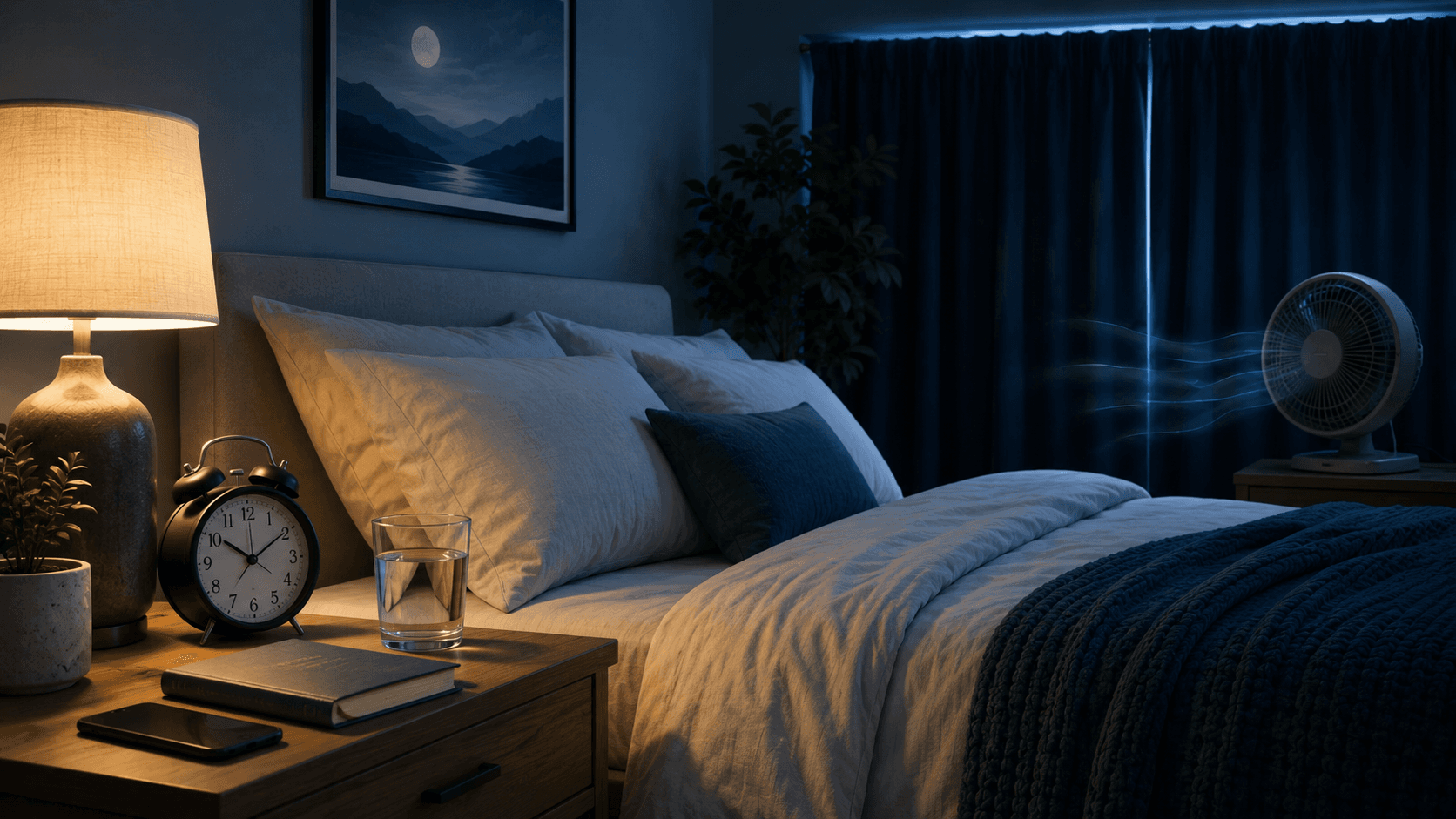
- Keep your room cool, dark, and quiet.
- Stop caffeine earlier than you think you need to.
- Dim lights and reduce screens before bed.
- Keep late meals, alcohol, and stressful work away from bedtime.
That alone solves more sleep friction than most people expect.
1. Keep a Stable Sleep Window
Pick a bedtime and wake time you can repeat most days. Your body likes rhythm more than weekend heroics.
Use a consistent sleep window when possible:
- Aim for the same wake time every day.
- Avoid sleeping in far beyond your normal schedule.
- Shift your bedtime gradually if you need a reset.
If you are rebuilding your mornings too, the best morning routine for energy works well with this step.
2. Cool the Room Down
Many people try to sleep in a room that is simply too warm. A cooler environment supports your body's natural drop in core temperature.
Check:
- Is the room cool enough to feel comfortable under bedding?
- Can you reduce heavy blankets or layered sleepwear?
- Would a fan improve both airflow and background noise?
3. Make the Room Dark Enough
Bedroom light pollution is easy to normalize. Hall lights, standby lights, glowing chargers, and streetlight spill all add up.
Check:
- Blackout curtains or shades if needed
- No bright LEDs facing the bed
- Eye mask if the room cannot get fully dark
- Night lighting kept dim and warm
4. Reduce Random Noise
Silence is not required. Consistency is usually better than sudden noise spikes.
Try:
- Fan or white noise
- Earplugs if the environment is unpredictable
- Closing doors earlier in the evening
- Moving noisy devices out of the room
5. Cut Evening Light Stimulation
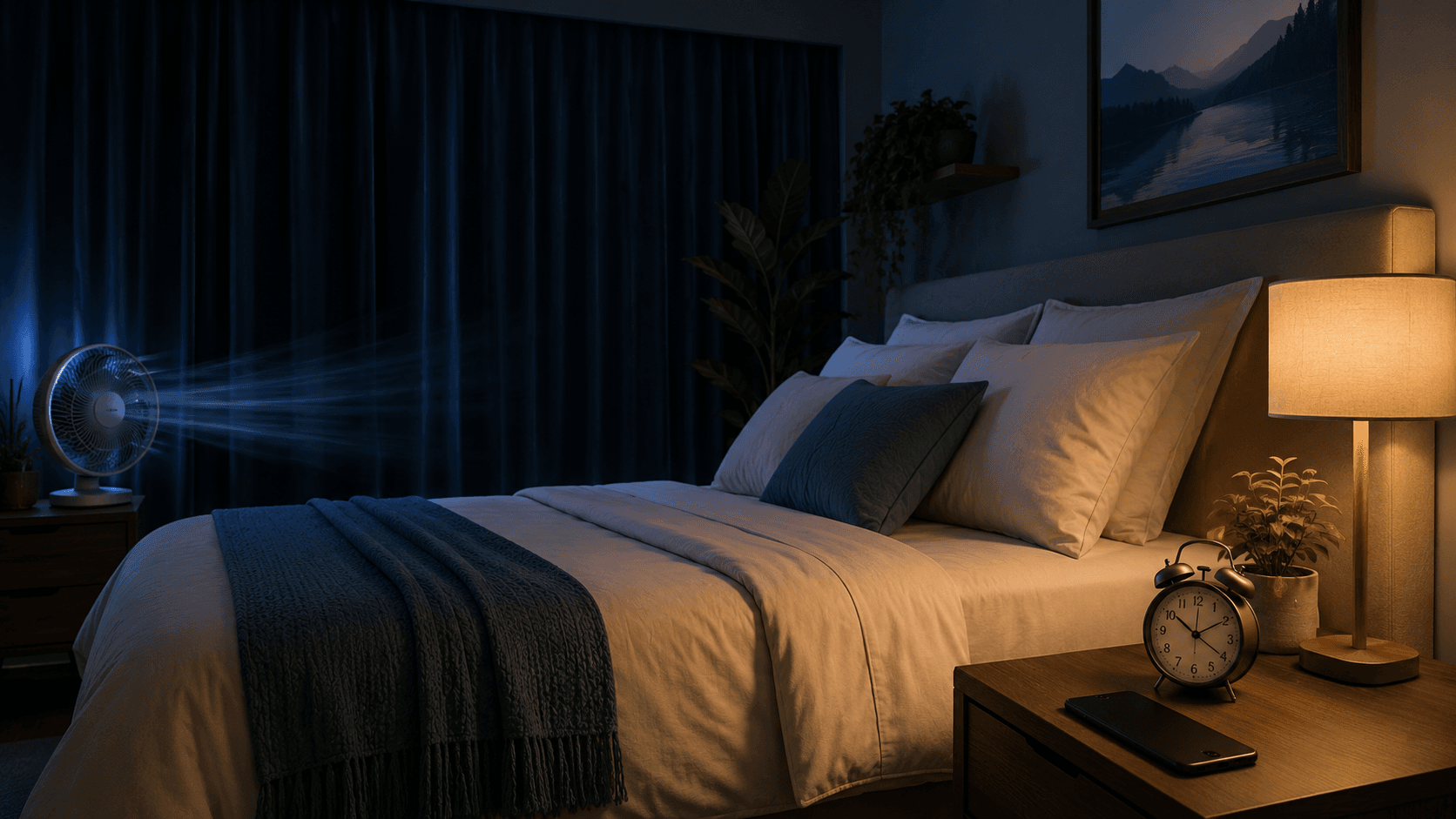
Bright light tells your body to stay alert. This matters most in the one to two hours before bed.
Check:
- Dim overhead lights
- Switch to lamps or warm lighting
- Lower screen brightness
- Stop doom-scrolling and work tabs
If the hardest part of bedtime is screens, the evening wind-down routine without screens gives you a cleaner replacement plan.
6. Set a Caffeine Cutoff
Caffeine timing ruins sleep for a lot of people who insist it does not affect them. Even when it does not stop sleep completely, it can make sleep lighter and less restorative.
Use a simple rule:
- Start with no caffeine after early afternoon.
- Move the cutoff earlier if you still feel wired at night.
- Watch for hidden caffeine in tea, soda, energy drinks, and chocolate.
7. Stop Heavy Meals Too Close to Bed
Going to bed overfull can make sleep shallow and uncomfortable. The same goes for spicy or acidic late-night meals if you are prone to reflux.
Ask:
- Am I eating dinner too late?
- Is my bedtime snack helping, or just habitual?
- Do certain foods reliably make nights worse?
8. Be Careful With Alcohol
Alcohol can feel sleepy at first and still leave your sleep fragmented later. If you fall asleep quickly but wake up too early or feel unrefreshed, alcohol timing is worth examining.
You do not need perfection here. Just notice the pattern honestly.
9. Use a Wind-Down Cue
Your brain handles transitions better when bedtime is recognizable. A short repeatable ritual is enough.
Choose two or three:
- Warm shower
- Reading
- Stretching
- Quiet music
- Journaling
- Preparing the room for tomorrow
10. Keep the Bed for Sleep, Not Stress

If your bed becomes a place for work, arguments, news, or long scrolling sessions, your brain starts pairing it with alertness instead of rest.
Try to keep the bed mostly associated with sleep and rest. If you cannot fall asleep after a while, get up briefly and do something calm in low light before returning.
11. Move During the Day
Sleep tends to improve when your body has a reason to feel physically ready for rest. You do not need an intense training plan for this to matter.
Helpful options:
- A walk outside
- Light strength work
- Mobility or stretching
- A short desk-break movement reset
If you spend most of the day sitting, the desk stretch routine for tight hips and shoulders is a useful daytime companion habit.
12. Get Morning Light
Morning light helps anchor your internal clock. It supports a stronger contrast between daytime alertness and nighttime sleepiness.
Try:
- Going outside soon after waking
- Opening curtains immediately
- Taking a short morning walk
13. Offload Mental Noise
Sometimes the problem is not sleep knowledge. It is unfinished mental loops.
Before bed, write down:
- Tomorrow's must-do items
- Open worries
- Anything you keep rehearsing mentally
This does not solve every stressor, but it gives your brain a place to put the load.
14. Use Relaxation on Purpose
If your body feels tired but your mind keeps running, structured calming practices can help. Keep them simple enough that they do not become another thing to optimize.
Good options:
- Slow breathing
- Body scan
- Gentle stretching
- Short beginner meditation
If you want a simple starting point, use how to start meditation for beginners.
15. Track Patterns, Not Perfect Nights
One bad night does not mean the routine failed. Look for trends across one to two weeks.
Track:
- Bedtime
- Wake time
- Caffeine timing
- Screen use before bed
- Alcohol
- How rested you felt in the morning
Patterns are more useful than memory.
A Simple 7-Day Reset

If you want a starting plan, use this:
Day 1: Set wake time
Day 2: Darken the bedroom
Day 3: Set caffeine cutoff
Day 4: Build a 20-minute wind-down
Day 5: Reduce late screens
Day 6: Get morning light
Day 7: Review what helped
This is enough to create traction without turning sleep into a second job.
When Sleep Hygiene Is Not Enough
Sleep hygiene helps a lot, but some problems need more than better habits.
Pay attention if you have:
- Loud snoring or gasping
- Persistent insomnia
- Severe daytime sleepiness
- Restless legs
- Ongoing pain that disrupts sleep
- Mood symptoms that are driving sleep problems
That is a signal to get more support, not to blame yourself for needing it.
Final Takeaway
The best sleep hygiene checklist is one you will actually repeat. Start with the changes that remove obvious friction, keep them steady, and let improvement build from there.
Use this page as a practical companion to the deeper guide on how to improve sleep quality.
Frequently Asked Questions
What is a sleep hygiene checklist?
A sleep hygiene checklist is a short set of habits and environment checks that support better sleep, such as consistent bedtimes, lower evening light, less caffeine late in the day, and a cooler bedroom.
How many sleep hygiene changes should I make at once?
Start with two or three changes that feel realistic. Consistency matters more than trying every sleep tip in one night.
Does sleep hygiene fix every sleep problem?
No. Sleep hygiene improves common habit and environment problems, but persistent insomnia, breathing issues, pain, or severe daytime fatigue may need medical evaluation.